Showing posts with label Brain. Show all posts

Copper-Plating

Sunday, August 21, 2011

Electrolysis
Electrolysis
Electrolysis is a process in which an electric current is passed through a liquid, causing a chemical reaction to take place. The liquid used is called the electrolyte. The wires or plates where the current enters or leaves the liquid are called electrodes. The electroysis of metallic solutions is useful in putting metal coatings on objects. If you have a look at a car bumper, you will notice that it has a nice, smooth, metallic appearance. This is because car bumpers are coated with the metal, nickel, in a process called electroplating. This helps to stop the metal underneath from rusting. The same method is used to coat cutlery with silver. This is called silver plating. Michael Faraday discovered the first law of electrolysis. The process is also used to purify metals like aluminium.

Copper-Plating
Copper-Plating
01. For this project you will need a glass jar, a copper coin, a paper clip, two batteries, insulated wire and water. Pour the water into the jar. Place the batteries together with unlike terminals adjacent. Connect wires to the terminals. Attach the copper coin to the wire from the a positive terminal of the battery. The paper clip must be attached to the wire from the negative terminal. Use plasticine. Do not allow the metal objects to touch in the solution. You could even tape each wire to the side of the jar so that they are suspended.

02. Observe closely what happens. Can you see bubbles? Leave them for a few minutes, then remove. Observe any colour changes. Replace them for a while. Are there any further changes?


Why It Works
copper coin
The copper coin is connected to the positive terminal of the battery - the current enters here. The other, the paper clip, is joined to the negative terminal - the current leaves here. As the current flows through the water from the positive electrode (anode) to the negative electrode (cathode), the copper is carried from the coin to the clip.


Copper-Plating 01

Bright Ideas
H Repeat the project using salt dissolved in vinegar instead of the water. What difference do you notice - if any? What do you observe about the appearance of the paper clip? Maybe your school has scales that can weigh very small objects? If the coin and the paper clip are weighed before immersion in the liquid and their weight recorded, you can check whether electro-plating has really taken place. After carrying out the project weigh them both again. Now replace the battery with a more powerful one, or add a second battery into a parallel circuit, to increase the 'push' of the current passing through the liquid. Weigh the coin and paper clip a second time. If the weight of the paper clip has increased further, then you have proved the first law of electrolysis -the size of the charge passed through the liquid determines the amount of copper freed.

Read more...

CAGED!

Monday, August 15, 2011

ELECTROMAGNETISM
ELECTROMAGNETISM
The English physicist, Michael Faraday, discovered that electrical energy could be turned into mechanical energy (movement) by using magnetism. He used a cylindrical coil of wire, called a solenoid, to create a simple electric motor. He went on to discover that mechanical energy can be converted into electrical energy - the reverse of the principle of the electric motor. His work led to the development of the dynamo. You can make a powerful electromagnet by passing electricity through a coil of wire wrapped many times around a nail (see page 26). Electromagnets are found in many everyday machines and gadgets. A body scanner, like the one pictured here, contains many ring-shaped electromagnets. With a solenoid and a current of electricity, you can close the cage.

CAGED!
CAGED 01


1. Take a piece of polystyrene and edge it with cardboard. Stick plastic straws upright around three sides as the bars of the cage.


CAGED 02


2. Cut out another piece of polystrene of the same size for the roof of the cage. Fix a piece of plastic straw to the side above the door. Wind a piece of wire around a nail 50 times leaving two ends. Fix the nail to the roof, as shown.


CAGED 03


Insert a needle into the straw so that it almost touches the nail. Cut out a rectangle of plastic for the door. Make a hole at the bottom of the door for the needle to fit through.


CAGED 04


Stick a piece of card across the door to help hold it open, and make sure the end of the needle just pokes through the hole. Now attach one of the wires to one terminal on the battery. Leave the other free. Make sure it will reach the other terminal. Put the animal into the cage.


Why It Works
switched
When the current is switched on, the nail becomes magnetized as the current flows through the wire. The needle in the door of the cage is attracted to the electromagnet. As the needle is pulled towards the nail, the door closes to trap the tiger.


Bright Ideas
Wind more turns of wire on to the electromagnet. The magnetic effect will increase. What happens if you use a more powerful battery?
Make another electromagnet using a shorter nail. This will also make the magnetic pull stronger.
Make an electromagnetic pick-up by winding wire around a nail. What objects

can you pick up? What happens when the current is turned off?
Use an electromagnet to make a roundabout work. Attach paper clips around the edge of a circular card lid to be the roof. Make sure it is free to spin, and place an electromagnet close to the paperclips. The roundabout should turn as you switch the current on and off quickly.

CAGED


Now pick up the free wire. Allow the free wire to come into contact with the unconnected battery terminal. The needle should be pulled back towards the nail. The door will fall down, trapping the animal in its cage.

Read more...

Red Nose Day

Tuesday, August 9, 2011

electricity and magnetism

electricity and magnetism
Hans Oersted, the nineteenth century Danish scientist, first proved the relationship between electricity and magnetism when he noticed that a magnet held near to a compass caused it to turn. When this experiment was repeated, replacing the magnet with a current of electricity, he observed the same effect. This was the beginning of electromagnetism. After Oersted's experiments, it was soon realised that magnets could be made by passing an electric current through coils of wire. The magnetic field (the region around the wire where the force of magnetism is felt) could be switched on and off with the electricity. When a doorbell is pressed, an electromagnet attracts, a clapper to strike the bell. Use electromagnetism to hold the clown's nose in place.

Red Nose Day
Red Nose Day 01


1. Take a piece of thick board and push a nail through the centre. Now wind a piece of wire around the nail at least 20 times, leaving two ends of the same length.


Red Nose Day 012


2. Cut two triangular pieces of polystyrene to support the board in a sloping position.


Red Nose Day 03
 

3. Attach the triangles, as shown, and pierce a small hole in the side of one of them for a paperclip to fit through.


Red Nose Day 04


4. On a second sheet of polystyrene draw a clown's face to fit on top of the shape you have made. Do not draw a nose on the face. Colour the face, then cut out your clown.


Red Nose Day 05


5. Fix a drawing pin to the side of a ping-pong ball, coloured red. This will be your clown's nose. It will not fit in place yet.


Red Nose Day 06


6. Position the batteries inside the shape as shown. Make sure unlike terminals are touching. Now connect a wire from the nail to one end of the batteries using plasticine. Connect the other to the paperclip.


Bright Ideas
  • H Reproduce Oersted's experiment. Magnetize a needle and rest it on a piece of folded cardboard that is balancing on a stick. Place it in ajar - this will act as a compass. Now set up a simple circuit, allowing the wire to run above the magnetized needle. Observe the effect on the needle when the current flows. Wind more lengths of wire round your compass. What difference does this make? Find out which appliances contain electromagnets - a telephone contains one.
  • Can you design a burglar alarm that works because of the effect of an electromagnet?
Why It Works
temporary magnet
When the current is switched on, the nail becomes a temporary magnet. The clown's nose stays in place, held in the magnetic field created by the electricity. When the electric current is turned off, the nose falls off. The nail loses its magnetic properties.


Red Nose Day 07


7. Push the paper clip through the hole until it touches the adjacent battery terminal. Leave half of the paper clip protruding through the hole. Position the red nose on the clown's face.


Red Nose Day


8. While the paperclip is pushed in wards, the nose will stick to the clown’s face. Now pull the paperclip outwards. The clown’s nose will roll of this face.

Read more...

Turn Off The Light

Monday, August 8, 2011

Electricity in The home 
Electricity in The home
Modern houses contain parallel circuits called ring mains. One circuit is for the lighting, the other is the main circuit. Access to the main circuit is made possible through wall sockets. All household lights and appliances are connected in parallel, as this allows all devices to operate on the same voltage (level of power). This voltage will not change if a piece of equipment is added or taken away (see page 22). The current leaves the house through another wire. Faulty wiring may cause a fire in the home. To avoid such a risk, plugs and circuits are fitted with fuses. A fuse is a piece of wire designed to melt, and so break a circuit, if the current is too high. A complex circuit, like that in a television set has hundreds or even thousands of circuit parts. They consist of both parallel and series circuits. Make your own game using circuits and switches.

 Turn Off The Light
Turn Off The Light 01


1. You will need a large board, three bulbs, three batteries, lengths of insulated wire, drawing pins, plasticine and paper clips.


Turn Off The Light 02


2. Place a battery in three corners of the board. Make sure that unlike terminals are facing. Attach the wires using plasticine


Turn Off The Light 03


3. Connect the bulbs to the batteries as shown. Leave gaps in the circuits for switches. These can be paperclips and drawing pins.


Turn Off The Light 04


4. Connect each switch by pressing down a paper clip on to a drawing pin. Observe the brightness of the bulbs. If any of the bulbs do not work, check all connections.


Turn Off The Light


5. Now experiment with your circuit board. Can you light up only one bulb at a time by disconnecting certain switches? Now try lighting up two bulbs simultaneously. You can have hours of fun trying various connections. Observe the bulbs. When do they glow most brightly? When are they dimmest?


Why It Works
The flow of electrons is regulated by connecting and disconnecting the switches on the circuit board. When a bulb is isolated by disconnecting a switch, the circuit into which it is wired is broken. When every switch is connected, all the bulbs glow. The high resistance of a fuse restricts the amount of current that can pass through. Each appliance needs a fuse of the correct resistance (see page 20).


Bright Ideas
  • Position the batteries so that like terminals are facing each other. What effect does this have on your circuit board? Can the bulbs be lit up simultaneously now? Why is this? Remember that electrons travel from negative to positive. Do the bulbs glow just as brightly as before?
  • If you remove one bulb, how does this affect the circuits?
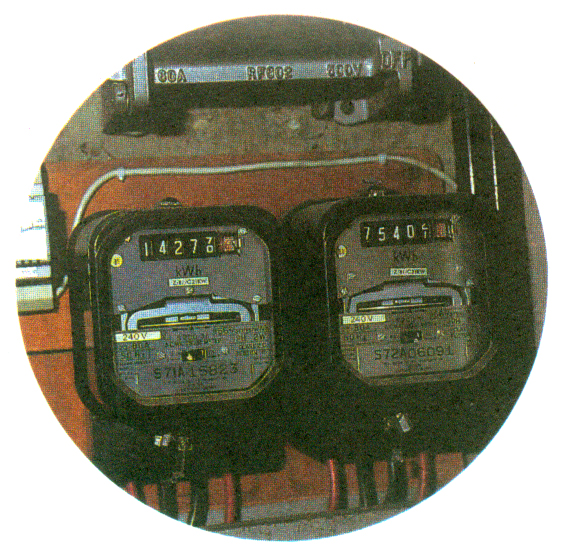
  • Ask an adult to show you where the electricity meter is located in your house. Keep a record of meter readings in your home for a week. Work out how much electricity has been used. Use your figures to make a graph. You could put the information on to a computer database if you have one at home or school. Count the number of sockets in your home. Make a list of all the electrical appliances used by your family. Watch the meter dials when each appliance is being used - which uses the most electricity? Work out some ways in which your family could save electricity.

Read more...

Lots of Lights

Saturday, August 6, 2011

Series and Parallels
As long ago as 1810, many larger cities had street lighting. An electric current was made to jump between two carbon rods - this was called electric arc lighting. First introduced by Sir Humphry Davy, these lamps were connected in series. This meant that all the lamps were connected as a part of one large circuit. It also meant that if one lamp went out, and the circuit was broken, they all went out. This often happens with Christmas tree lights, although they can be arranged in parallel circuits to avoid this problem. It was Thomas Edison who recognised the need to use parallel circuits for street lighting. Each bulb in a parallel circuit has a circuit of its own. If one bulb fails, the others will continue to glow - the current is divided equally between them.

Lots of Lights
Lots of Lights 01


You will need two large boards, drawing pins, insulated wire, bulbs, bulb-holders and batteries. The drawing pins can act as contacts where your wires join.


Lots of Lights 012


Set up your parallel circuit. If one bulb fails the other will remain alight because the circuits are separate. Observe how brightly the bulbs glow.


Lots of Lights 03


Replace one of the bulbs in the parallel circuit with another battery. Does the light from the bulb change? Now wire up a series circuit like the red one shown here. Include one bulb and two batteries in this circuit.


 Why It Works
series circuit
A series circuit uses one path to connect the bulb and battery. If two batteries are used, the bulb glows twice as brightly as it would with one. Two bulbs in a series circuit would not glow brightly as one. A parallel circuit provides more than one path for the current. Each bulb receives the same voltage (amount of power) even if another battery or bulb is added or removed. If two batteries are used in a parallel circuit, their power does not combine as in the series circuit. The bulb receives the voltage of one battery, but glows for double the time


Bright Ideas
Add another bulb to the series circuit -what do you notice when the current is switched on? Now add another one. What difference does this make? Draw a series circuit diagram.
Wire another bulb into the parallel circuit. What do you notice about the glow from the bulbs? Draw a parallel circuit diagram.
For how long do the bulbs in each kind of circuit stay alight? Which type of circuit is most wasteful of energy?
Lots of Lights
 
05. Observe this bulb. Does it shine as brightly as the bulb in the yellow parallel circuit? Try removing one battery. Which bulb is shining the brightest now?


Read more...

Insulators and Conductors

Thursday, August 4, 2011

Insulators and Conductors
Our bodies can conduct electricity, especially when they are wet. Never touch plugs, points or light switches with wet hands. A conductor will allow elecricity to pass through it. We use conductors to take electricity to where it is needed. We use insulators to prevent   from reaching places where it could be dangerous. Electricians, like the one pictured here, wear rubber boots to protect themselves from electric shocks. Metal wires conducting electricity are insulated with rubber or plastic to make them safe. Conduct your way through a maze, using insulators and conductors as your guides.


AMAZING
Insulators and Conductors 01


Take a piece of thick board and cut out a piece of aluminium foil of the same size. Cover this with sticky-backed plastic.


Insulators and Conductors 02


Design your maze on the board, and cut out strips of plastic-covered foil to fit the paths. Stick them down making sure that your "pathway" is the last to go on.


Insulators and Conductors 03


Before you stick the final part of your "pathway" down, make a hole near the edge of the board and insert the end of some insulated wire.


Insulators and Conductors 04


Attach this wire to one terminal of a battery. To the other terminal, attach more wire with a bulb holder in the middle. Connect the other e to a nail.      
 

 Why It Works
The aluminium foil conducts electricity and allows the circuit to be completed. The bulb glows. But when the nail touches the plastic covering in the maze, the bulb goes out. Plastic is an insulator. A substance that conducts electricity must contain charged particles that are free to move around. These free electrons pass on the current. The electrons in the plastic cannot move.


Bright Ideas
  • Build a simple circuit leaving a gap between two wires. Collect a variety of materials and test each in the gap. Ensure that contact is made with the material by each of the bared wires. Which one makes the bulb light up? Record your results. Make separate lists. Which materials are insulators, which are conductors? Do some materials conduct electricity better than others? How can you tell?
  • Look at objects around you, such as tools and electrical equipment - which have insulating material on them? Why is it necessary to insulate objects like this?
Insulators and Conductors


05. Find your way through the maze by watching the bulb. If it goes out, try another route.

Read more...

Danger at sea!

Tuesday, August 2, 2011

Bulbs
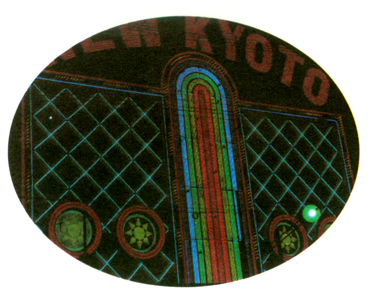
The warning flashes of lighthouses are vital to the safety of ships around the coastline. It was not until the mid-nineteenth century that lighthouses were fitted with electric light bulbs. Two men were responsible for the invention of the incandescent (white-hot) electric light bulb; Joseph Swan, an American and Thomas Edison, an Englishman. Edison's light bulbs contained a carbon filament within a vacuum. He first produced this on 21st October, 1879. By 1913, the tungsten filament (a type of metal) that is still used today had been introduced. Neon lights, like those pictured here, contain a gas. When electricity is passed through the gas, the tube glows. Electronic bulbs have also been developed. These produce only light - not heat - and so save energy.

Danger at sea!
Danger at sea 01

  
1. Take a piece of candle and make a hole down the centre. Use a paperclip to thread an elastic band through.


Danger at sea 02


2. Push the candle into a cotton reel and fix the band to the top with sticky tape. Also attach a bulb in a holder to the top passing the wires down through the candle.


Danger at sea 03


3. Use a long cardboard tube for your lighthouse. Cut a piece of polystyrene to fit the end and fix the candle through the middle, as shown.


Danger at sea 04


4. Insert the whole thing into the top of your lighthouse, allowing the wires to hang out of the end.


Danger at sea 05


5. Fix the polystyrene, candle and elastic band in place with two cocktail sticks. Push them right through the cardboard tube from one side to the other.


Danger at sea 06


6. Line a plastic cup with aluminium foil. Cut out a window to see the bulb. A
piece of  card with a hole to fit over the bulb will hold it in place.


Why It Works
electric energy
As the bulb puts the electrons to work by making it travel through a very long, thin wire called the filament, electric energy is transferred into light energy. Tungsten is a highly resistant metal that can become white hot without melting. Air is removed from the bulb and replaced by the harmless gas, argon. Electrons flow into the bulb when the circuit is complete and cause the wire to glow. Metal at the base of the bulb makes contact with the circuit. Bulbs can become very hot when switched on.


Danger at sea


5. Connect the wires to a battery and hide it under a papier mache "rock". Add cotton wool waves. Now twist the cotton reel around several times, let go and watch the warning light turn.


Bright Ideas
  • Can you make a different kind of flashing light without switching the current off and on? Adapt the project to make the light revolve and flash in a different way. Try using coloured cellophane in the window to make a coloured light. Another way to make a flashing light is to use a circle of card, out of which slits like the spokes of a wheel have been cut. Place it in front of the bulb - then revolve the card when the bulb is glowing.
  • Design and build a traffic light circuit so that the bulbs can be switched on and off in particular sequence. The sequence of change is different in various countries.
  • What causes a fluorescent strip light to flicker? The answer is to do with the fact that mains electricity uses an alternating current (a current that varies all the time).
  • Design a poster encouraging people to I turn lights off and save energy.


Read more...

About This Blog

Lorem Ipsum

  © Blogger templates Newspaper by Ourblogtemplates.com 2008

Back to TOP